


Load peak management with the help of C&I energy storage systems
Peak management, also known as peak shaving, is an increasingly important strategy for companies and organizations to effectively control their energy costs while contributing to the stability of the power grid. In a time of rising energy costs and increasing demands on grid stability, innovative solutions in this area are continually gaining importance. Modern energy storage systems can play a transformative role, particularly in the commercial and industrial (C&I) sector, where high energy consumption and irregular load profiles are commonplace.
Fundamentals of Peak Load Management
Peak load management is the systematic and targeted reduction of peak loads in a company's or organization's electricity consumption. These peak loads typically arise from the simultaneous operation of several energy-intensive processes or systems and can lead to significant cost increases. This is because many energy suppliers and grid operators calculate their grid fees not only based on the total amount of energy consumed (kWh), but also based on the highest power peak (kW or kVA) that occurred within a billing period.
These power-based tariffs reflect the reality that the electricity grid infrastructure must be designed to accommodate this peak load, even if it occurs only rarely. For the electricity grid operator, every peak load represents a challenge, as sufficient generation capacity and grid capacity must be provided to cover it. The resulting costs are passed on to consumers in the form of demand charges.
By systematically smoothing these peaks, companies can therefore achieve significant cost savings. Depending on the tariff structure and individual load profile, these savings can amount to between 10% and 30% of total energy costs, which represents a significant economic advantage, especially for energy-intensive companies.
How C&I Energy Storage Systems Work
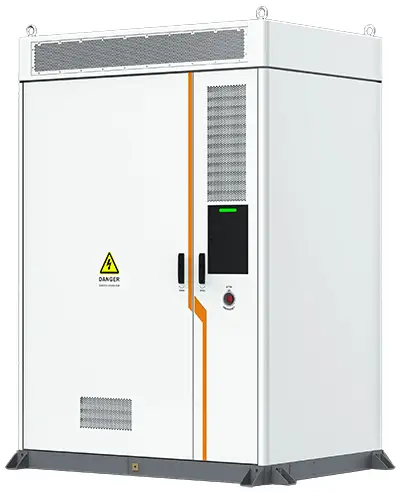
Energy storage systems for commercial and industrial applications today represent highly sophisticated technical solutions specifically tailored to the needs of businesses. These systems typically consist of several core components:
- Battery storage: The heart of the system is usually a powerful battery unit, usually based on lithium-ion technology. This technology has established itself as the standard in this application area due to its high energy density, long service life, and fast response time. Depending on the requirements, various lithium-ion chemistries are used, for example, LFP (lithium iron phosphate) for particularly long-lasting and safe applications or NMC (nickel manganese cobalt) for applications with higher energy density requirements.
- Power electronics and inverters: These components are responsible for converting direct current (DC) from the batteries to alternating current (AC) from the power grid. Modern bidirectional inverters enable both charging the storage system from the grid and feeding it back into the company's internal power grid. The power electronics also precisely control the charging and discharging processes to maximize battery life and optimize their performance.
- Control software and energy management systems: These software solutions form the "brain" of the energy storage system. They continuously analyze various parameters such as current energy consumption, forecasts of future consumption, electricity price signals, and grid frequency to make decisions about optimal charging and discharging cycles. Advanced systems use machine learning algorithms to recognize and predict consumption patterns, further increasing the effectiveness of peak load management.
- Measurement, control, and regulation technology: Precise measuring devices and sensors continuously record all relevant electrical parameters such as current, voltage, power, and frequency at various measuring points in the system. This data serves as the basis for the energy management system's control decisions and enables precise monitoring of system performance.
- Cooling systems: Since battery storage systems generate heat during charging and discharging processes, efficient cooling systems are essential to ensure optimal operating temperatures and maximize battery life.
The basic functionality of these systems is based on a simple yet effective principle: Excess energy is stored in the batteries during off-peak times or periods of low electricity prices. During peak load times or when a predefined power limit is about to be exceeded, this stored energy is then released in a targeted manner to reduce grid consumption. This process is automated and occurs in real time, effectively smoothing grid loads without disrupting normal operations.
The response time of modern energy storage systems is in the millisecond range, enabling precise control and rapid adaptation to changing conditions. This high level of dynamics allows even short-term load peaks, such as those that occur when large machines or systems start up, to be effectively balanced.
Load peak management using C&I energy storage systems
Peak load management, also known as peak shaving or peak load balancing, is an increasingly important strategy for companies and organizations to effectively control their energy costs while contributing to the stability of the power grid. In a time of rising energy costs and increasing demands on grid stability, innovative solutions in this area are continually gaining importance. Modern energy storage systems can play a transformative role, particularly in the commercial and industrial (C&I) sector, where high energy consumption and irregular load profiles are commonplace.
Fundamentals of Peak Load Management
Peak load management is the systematic and targeted reduction of peak loads in a company's or organization's electricity consumption. These peak loads typically arise from the simultaneous operation of several energy-intensive processes or systems and can lead to significant cost increases. This is because many energy suppliers and grid operators calculate their grid fees not only based on the total amount of energy consumed (kWh), but also based on the highest power peak (kW or kVA) that occurred within a billing period.
These power-based tariffs reflect the reality that the electricity grid infrastructure must be designed to accommodate this peak load, even if it occurs only rarely. For the electricity grid operator, every peak load represents a challenge, as sufficient generation capacity and grid capacity must be provided to cover it. The resulting costs are passed on to consumers in the form of demand charges.
By systematically smoothing these peaks, companies can therefore achieve significant cost savings. Depending on the tariff structure and individual load profile, these savings can amount to between 10% and 30% of total energy costs, which represents a significant economic advantage, especially for energy-intensive companies.
How C&I Energy Storage Systems Work
Energy storage systems for commercial and industrial applications today represent highly sophisticated technical solutions specifically tailored to the needs of businesses. These systems typically consist of several core components:
- Battery storage: The heart of the system is usually powerful battery units, usually based on lithium-ion technology. This technology has established itself as the standard in this application area due to its high energy density, long service life, and fast response time. Depending on the requirements, various lithium-ion chemistries are used, for example, LFP (lithium iron phosphate) for particularly long-lasting and safe applications or NMC (nickel manganese cobalt) for applications with higher energy density requirements.
- Power electronics and inverters: These components are responsible for converting direct current (DC) from the batteries to alternating current (AC) from the power grid. Modern bidirectional inverters enable both charging the storage system from the grid and feeding it back into the company's internal power grid. The power electronics also precisely control the charging and discharging processes to maximize battery life and optimize their performance.
- Control software and energy management systems: These software solutions form the "brain" of the energy storage system. They continuously analyze various parameters such as current energy consumption, forecasts of future consumption, electricity price signals, and grid frequency to make decisions about optimal charging and discharging cycles. Advanced systems use machine learning algorithms to recognize and predict consumption patterns, further increasing the effectiveness of peak load management.
- Measurement, control, and regulation technology: Precise measuring devices and sensors continuously record all relevant electrical parameters such as current, voltage, power, and frequency at various measuring points in the system. This data serves as the basis for the energy management system's control decisions and enables precise monitoring of system performance.
- Cooling systems: Since battery storage systems generate heat during charging and discharging processes, efficient cooling systems are essential to ensure optimal operating temperatures and maximize battery life.
The basic functionality of these systems is based on a simple yet effective principle: Excess energy is stored in the batteries during off-peak times or periods of low electricity prices. During peak load times or when a predefined power limit is about to be exceeded, this stored energy is then released in a targeted manner to reduce grid consumption. This process is automated and occurs in real time, effectively smoothing grid loads without disrupting normal operations.
The response time of modern energy storage systems is in the millisecond range, enabling precise control and rapid adaptation to changing conditions. This high level of dynamics allows even short-term load peaks, such as those that occur when large machines or systems start up, to be effectively balanced.


































Advantages of Energy Storage for Peak Load Management
The integration of energy storage systems into existing C&I infrastructures offers a variety of economic, technical, and ecological advantages:
- Cost savings through reduced performance-related grid charges: This financial advantage is often the primary driver for investments in energy storage systems. By selectively capping peak loads, the performance-related components of the electricity bill can be significantly reduced. For large industrial operations, these savings can amount to several tens of thousands of euros per year. The exact amount of savings depends on the individual load profile, the energy supplier's tariff structure, and the dimensioning of the storage system. Typically, the payback period for such systems is between 3 and 7 years, depending on the specific conditions and possible funding opportunities.
- Grid stability and relief of the local power grid: By reducing peak loads, companies with energy storage systems contribute to stabilizing the local power grid. This is particularly important in areas with weak grid infrastructure or high penetration of renewable energies. Relieving the grid's load can, in some cases, also lead to improved grid connection conditions or reduced grid expansion costs, for example, if an increase in connected capacity can be avoided.
- Investment protection and avoidance of expensive grid expansion measures: When expanding or modernizing production facilities, the installation of an energy storage system can often avoid the need for expensive grid connection expansion. The costs of increasing grid connection power can easily reach six-figure figures, depending on the location and the required power. An energy storage system can provide the additional peak power required without having to expand the existing grid connection.
- High flexibility and adaptability: Modern energy storage systems can be adapted to different load profiles and operating requirements. They can be seamlessly integrated into existing energy management systems and can usually be expanded modularly as requirements change over time. This flexibility makes them a future-proof investment that can grow with the company.
- Optimal integration of renewable energies: For companies that have their own photovoltaic systems or other renewable energy sources, energy storage systems offer the opportunity to optimally utilize the electricity they generate. Excess energy can be temporarily stored and used later when needed, maximizing self-consumption and reducing dependence on the public power grid. This can lead to further cost savings while simultaneously improving the company's carbon footprint.
- Increased supply security and emergency power capability: Depending on the configuration, energy storage systems can also contribute to increasing supply security. In the event of a grid failure, critical systems can be supplied with power from the storage for a limited period of time until emergency generators are started up or regular power is restored. This can be particularly valuable for companies with sensitive processes or high security of supply requirements.
- Additional revenue streams through grid services: In some markets, operators of energy storage systems can generate additional revenue by offering grid services such as frequency control or balancing energy. Although these options are still in the development stage in many regions, the trend toward greater integration of decentralized resources into grid stabilization shows that additional business models could emerge in the future.
Dimensioning and Implementation
The optimal dimensioning of an energy storage system for peak load management is a complex process that requires careful analysis and planning. The foundation for this is the detailed analysis of historical load profiles of the company or plant, ideally with data from a period of at least 12 months to reflect seasonal fluctuations.
Analysis of Historical Load Profiles
The load profile analysis includes the following steps:
- Recording quarter-hour power values over a representative period
- Identification of recurring load patterns and seasonal dependencies
- Determination of critical load peaks and their temporal distribution
- Correlation analysis with external factors such as temperature, production cycles, or operating times
Important dimensioning factors in detail
- Amount and duration of peak loads: The maximum power of the load peaks in kW determines the required discharge power of the storage system. The duration of these peaks (typically between 15 minutes and several hours) determines the required storage capacity in kWh. A storage system must be at least powerful enough to cover the difference between peak load and the targeted maximum grid load.
- Frequency and predictability of load peaks: The number of load peaks per day or week influences the cycle stability and service life of the storage system. Highly predictable load peaks allow for targeted charging planning, while unpredictable peaks require faster response times and possibly larger storage reserves. The reliability of the forecast models plays a crucial role here.
- Total energy demand and consumption patterns: The base load and the ratio between average and maximum power demand (simultaneity factor) determine the optimization potential. Highly fluctuating consumption patterns with pronounced peaks offer greater savings potential than consistent load profiles. The ratio between day and night consumption can also open up opportunities for temporal arbitrage.
- Economic analysis and payback period: This includes a complete cost-benefit analysis with:
- Investment costs for battery storage, power electronics, and installations
- Ongoing costs for maintenance, insurance, and system losses
- Savings in grid usage fees and demand prices
- Potential additional revenue from participation in balancing energy markets
- Consideration of battery degradation and the expected system lifetime
- Consideration of funding programs and tax incentives
Technical Implementation
After successful dimensioning, the technical implementation follows, which includes the following steps:
- System Selection: Selection of the optimal battery technology (lithium-ion, redox flow, etc.) based on the requirements for performance, energy, cycle stability, and response time
- Integration into the Energy Management System: Integration into existing building control systems or SCADA systems with appropriate interfaces
- Control Algorithms: Implementation of intelligent control algorithms for predictive load management and optimized charging/discharging strategies
- Monitoring and Reporting: Establishment of continuous monitoring systems for Performance monitoring and reporting purposes
Advantages of Energy Storage for Peak Load Management
The integration of energy storage systems into existing C&I infrastructures offers a variety of economic, technical, and ecological advantages:
- Cost savings through reduced performance-related grid charges: This financial advantage is often the primary driver for investments in energy storage systems. By selectively capping peak loads, the performance-related components of the electricity bill can be significantly reduced. For large industrial operations, these savings can amount to several tens of thousands of euros per year. The exact amount of savings depends on the individual load profile, the energy supplier's tariff structure, and the dimensioning of the storage system. Typically, the payback period for such systems is between 3 and 7 years, depending on the specific conditions and possible funding opportunities.
- Grid stability and relief of the local power grid: By reducing peak loads, companies with energy storage systems contribute to stabilizing the local power grid. This is particularly important in areas with weak grid infrastructure or high penetration of renewable energies. Relieving the grid's load can, in some cases, also lead to improved grid connection conditions or reduced grid expansion costs, for example, if an increase in connected capacity can be avoided.
- Investment protection and avoidance of expensive grid expansion measures: When expanding or modernizing production facilities, the installation of an energy storage system can often avoid the need for expensive grid connection expansion. The costs of increasing grid connection power can easily reach six-figure figures, depending on the location and the required power. An energy storage system can provide the additional peak power required without having to expand the existing grid connection.
- High flexibility and adaptability: Modern energy storage systems can be adapted to different load profiles and operating requirements. They can be seamlessly integrated into existing energy management systems and can usually be expanded modularly as requirements change over time. This flexibility makes them a future-proof investment that can grow with the company.
- Optimal integration of renewable energies: For companies that have their own photovoltaic systems or other renewable energy sources, energy storage systems offer the opportunity to optimally utilize the electricity they generate. Excess energy can be temporarily stored and used later when needed, maximizing self-consumption and reducing dependence on the public power grid. This can lead to further cost savings while simultaneously improving the company's carbon footprint.
- Increased supply security and emergency power capability: Depending on the configuration, energy storage systems can also contribute to increasing supply security. In the event of a grid failure, critical systems can be supplied with power from the storage for a limited period of time until emergency generators are started up or regular power is restored. This can be particularly valuable for companies with sensitive processes or high security of supply requirements.
- Additional revenue streams through grid services: In some markets, operators of energy storage systems can generate additional revenue by offering grid services such as frequency control or balancing energy. Although these options are still in the development stage in many regions, the trend toward greater integration of decentralized resources into grid stabilization shows that additional business models could emerge in the future.
Dimensioning and Implementation
The optimal dimensioning of an energy storage system for peak load management is a complex process that requires careful analysis and planning. The foundation is the detailed analysis of the company's or plant's historical load profiles, ideally with data from a period of at least 12 months to reflect seasonal fluctuations.
Analysis of Historical Load Profiles
The load profile analysis includes the following steps:
- Recording quarter-hour power values over a representative period
- Identification of recurring load patterns and seasonal dependencies
- Determination of critical load peaks and their temporal distribution
- Correlation analysis with external factors such as temperature, production cycles, or operating times
Important dimensioning factors in detail
- Amount and duration of peak loads: The maximum power of the load peaks in kW determines the required discharge capacity of the storage system. The duration of these peaks (typically between 15 minutes and several hours) determines the required storage capacity in kWh. A storage system must be at least powerful enough to cover the difference between peak load and the targeted maximum grid load.
- Frequency and predictability of load peaks: The number of load peaks per day or week influences the cycle stability and service life of the storage system. Highly predictable load peaks allow for targeted charging planning, while unpredictable peaks require faster response times and possibly larger storage reserves. The reliability of the forecast models plays a crucial role here.
- Total energy demand and consumption patterns: The base load and the ratio between average and maximum power demand (simultaneity factor) determine the optimization potential. Highly fluctuating consumption patterns with pronounced peaks offer greater savings potential than consistent load profiles. The ratio between day and night consumption can also open up opportunities for temporal arbitrage.
- Economic analysis and payback period: This includes a complete cost-benefit analysis with:
- Investment costs for battery storage, power electronics, and installations
- Ongoing costs for maintenance, insurance, and system losses
- Savings in grid usage fees and demand charges
- Potential additional revenue from participation in balancing energy markets
- Consideration of battery degradation and the expected system lifetime
- Consideration of funding programs and tax incentives
Technical Implementation
After successful dimensioning, the technical implementation follows, which includes the following steps:
- System Selection: Selection of the optimal battery technology (lithium-ion, redox flow, etc.) based on the requirements for performance, energy, cycle stability, and response time
- Integration into the Energy Management System: Integration into existing building control systems or SCADA systems with appropriate interfaces
- Control Algorithms: Implementation of intelligent control algorithms for predictive load management and optimized charging/discharging strategies
- Monitoring and Reporting: Establish continuous monitoring systems for performance monitoring and reporting purposes.


Application Examples
In practice, there are numerous successful implementations with different requirements and solution approaches:
Production plants with energy-intensive machines
Manufacturing plants, especially in metal and plastics processing, typically experience pronounced peak loads due to the temporary start-up of energy-intensive machines such as smelters, presses, or welding systems. For example, an aluminum plant in southern Germany was able to reduce its grid connection costs by €120,000 annually using a 2 MW/1 MWh battery storage system. The storage system balances short-term load peaks when multiple smelters are started up simultaneously and enables the coordinated control of energy-intensive processes without production restrictions.
Data centers with consistently high base load requirements
Data centers have a high base load due to the continuous operation of the servers, but can experience additional load peaks due to air conditioning, especially on hot summer days, and redundant systems. A cloud service provider in Frankfurt implemented a 500 kW/750 kWh storage system that not only smooths peak loads but also functions as an uninterruptible power supply (UPS), protecting critical infrastructure in the event of grid disruptions. This dual function significantly improved the system's economic efficiency.
Logistics centers with electric vehicle fleets
With the increasing electrification of logistics fleets, new challenges arise for load management. A large logistics company near Hamburg installed a 750 kW/1.5 MWh battery system to absorb peak loads when several electric delivery vehicles are simultaneously charging at the end of the shift. The system enables a 40% reduction in grid connection power while simultaneously optimizing charging times for cost-effective tariff periods. Integration with the photovoltaic system on the hall roof also enables a higher self-consumption rate of the generated solar energy.
Shopping centers with variable load profiles
Shopping centers and retail buildings experience strong fluctuations in energy consumption depending on the time of day, particularly due to air conditioning and lighting. A shopping center in North Rhine-Westphalia implemented a 600 kW/900 kWh storage system that primarily reduces midday peak loads through air conditioning in the summer. Furthermore, the storage system is charged at night when electricity prices are low and discharged when prices are high. The system is controlled by an AI-based forecasting system that takes weather data, expected visitor flows, and electricity price signals into account to optimally manage the battery storage system.
Future Perspectives
The future development of peak load management with C&I energy storage systems will be characterized by several innovative approaches and technologies:
AI-based forecasting systems
Machine learning and artificial intelligence are revolutionizing the accuracy of peak load forecasting. These systems not only analyze historical consumption data but also integrate external factors such as weather forecasts, production plans, market price signals, and even social media trends to predict peak loads more accurately. The improved prediction accuracy enables proactive rather than reactive control of energy storage systems, significantly increasing their effectiveness.
Virtual Power Plants and Aggregation
Networking multiple decentralized energy storage systems into virtual power plants opens up new opportunities for participation in energy markets. Aggregation allows even smaller C&I storage systems to be bundled and offered for system services such as primary control power or redispatch. This multiple marketing significantly improves the economic efficiency of the systems and shortens payback periods.
Cross-sector solutions
Forward-looking concepts integrate various energy sectors:
- Power-to-Heat: Excess energy is converted into heat and stored in thermal storage, which is particularly relevant for industrial processes with high heat requirements.
- Power-to-Gas/Hydrogen: Electrolysis systems convert excess electricity into hydrogen, which can serve as a long-term energy storage medium.
- Vehicle-to-Grid (V2G): Electric vehicle fleets are used as flexible Storage capacity is used and can also feed energy back into the grid if needed.
Economic Incentives
The economic attractiveness of C&I energy storage systems will continue to increase due to several factors:
- Continuously falling battery costs due to technological advances and economies of scale
- Rising grid usage fees and widening spreads between peak and off-peak tariff periods
- Growing volatility in the energy market due to the increasing share of renewable energies
- New regulatory frameworks that more strongly reward flexibility options
- Increasing CO2 prices, which make the optimization of energy consumption more economically attractive makes
Due to these developments, peak load management with C&I energy storage systems will become an integral component of modern energy management systems in the coming years and make an important contribution to the energy transition and grid stability.
Application Examples
In practice, there are numerous successful implementations with different requirements and solution approaches:
Production plants with energy-intensive machines
Manufacturing plants, especially in metal and plastics processing, typically experience pronounced peak loads due to the temporary start-up of energy-intensive machines such as smelters, presses, or welding systems. For example, an aluminum plant in southern Germany was able to reduce its grid connection costs by €120,000 annually using a 2 MW/1 MWh battery storage system. The storage system balances short-term load peaks when multiple smelters are started up simultaneously and enables the coordinated control of energy-intensive processes without production restrictions.
Data centers with consistently high base load requirements
Data centers have a high base load due to the continuous operation of the servers, but can experience additional load peaks due to air conditioning, especially on hot summer days, and redundant systems. A cloud service provider in Frankfurt implemented a 500 kW/750 kWh storage system that not only smooths peak loads but also functions as an uninterruptible power supply (UPS), protecting critical infrastructure in the event of grid disruptions. This dual function significantly improved the system's economic efficiency.
Logistics centers with electric vehicle fleets
With the increasing electrification of logistics fleets, new challenges arise for load management. A large logistics company near Hamburg installed a 750 kW/1.5 MWh battery system to absorb peak loads when several electric delivery vehicles are simultaneously charging at the end of the shift. The system enables a 40% reduction in grid connection power while simultaneously optimizing charging times for cost-effective tariff periods. Integration with the photovoltaic system on the hall roof also enables a higher self-consumption rate of the generated solar energy.
Shopping centers with variable load profiles
Shopping centers and retail buildings experience strong fluctuations in energy consumption depending on the time of day, particularly due to air conditioning and lighting. A shopping center in North Rhine-Westphalia implemented a 600 kW/900 kWh storage system that primarily reduces midday peak loads through air conditioning in the summer. In addition, the storage system is charged at night when electricity prices are low and discharged when prices are high. The system is controlled by an AI-based forecasting system that takes weather data, expected visitor flows, and electricity price signals into account to optimally manage the battery storage.
Future Perspectives
The future development of peak load management with C&I energy storage systems will be characterized by several innovative approaches and technologies:
AI-based forecasting systems
Machine learning and artificial intelligence are revolutionizing the accuracy of peak demand prediction. These systems not only analyze historical consumption data but also integrate external factors such as weather forecasts, production schedules, market price signals, and even social media trends to predict peak demand more accurately. The improved prediction accuracy enables proactive rather than reactive control of energy storage systems, significantly increasing their effectiveness.
Virtual Power Plants and Aggregation
Networking multiple decentralized energy storage systems into virtual power plants opens up new opportunities for participation in energy markets. Through aggregation, even smaller C&I storage systems can be bundled and offered for system services such as primary control power or redispatch. This multiple marketing significantly improves the economic efficiency of the systems and shortens payback periods.
Cross-sector solutions
Forward-looking concepts integrate various energy sectors:
- Power-to-Heat: Excess energy is converted into heat and stored in thermal storage, which is particularly relevant for industrial processes with high heat requirements.
- Power-to-Gas/Hydrogen: Electrolysis systems convert excess electricity into hydrogen, which can serve as a long-term energy storage medium.
- Vehicle-to-Grid (V2G): Electric vehicle fleets are used as flexible Storage capacity is used and can also feed energy back into the grid if needed.
Economic Incentives
The economic attractiveness of C&I energy storage systems will continue to increase due to several factors:
- Continuously falling battery costs due to technological advances and economies of scale
- Rising grid usage fees and widening spreads between peak and off-peak tariff periods
- Growing volatility in the energy market due to the increasing share of renewable energies
- New regulatory frameworks that more strongly reward flexibility options
- Increasing CO2 prices, which make the optimization of energy consumption more economically attractive makes
Due to these developments, peak load management with C&I energy storage systems will become an integral component of modern energy management systems in the coming years and make an important contribution to the energy transition and grid stability.